
 English
 русский
 español
 العربية
Recherche
Qu\'est-ce que tu cherches?
Recherche

The choice between a Cellular on Wheels (COW) and a permanent cell tower depends entirely on your project timeline, location permanence, and payload requirements. A COW is vastly superior for short-term needs (events, disaster recovery, temporary construction sites) because it can be deployed in hours and relocated easily, though it carries higher long-term operational costs and lower payload capacities. A permanent cell tower (lattice or monopole) is the optimal choice for long-term network densification, offering massive payload capacity, superior structural rigidity, and the lowest total cost of ownership (TCO) over a 10-to-20-year lifespan.
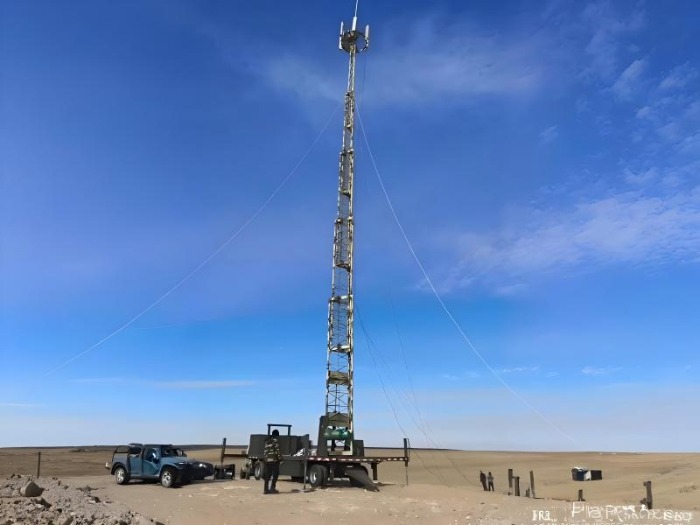
· Deployment Speed: COWs can be operational in hours, making them ideal for emergencies. Permanent towers require weeks or months for foundations, zoning, and erection.
· Cost Structure: COWs have low Capital Expenditure (CAPEX) but high Operational Expenditure (OPEX) due to fuel, leasing, and maintenance. Permanent towers have high upfront CAPEX but very low ongoing OPEX.
· Payload and Height Limits: Permanent towers can reach over 100 meters and support multi-operator, heavy 5G arrays. COWs typically max out at 15–30 meters with limited antenna capacity.
· Structural Rigidity: Permanent towers are engineered for extreme wind and ice loads (e.g., 200+ km/h). COW structures must balance lightweight mobility with stability, often relying on hydraulic outriggers and ballast rather than deep concrete foundations.
· Lifecycle: COWs are mobile assets that can be reused across multiple projects. Permanent towers are fixed assets tied to a specific geographic location.
The most distinct difference between the two is the speed at which they can be brought online.
Cellular on Wheels (COW)
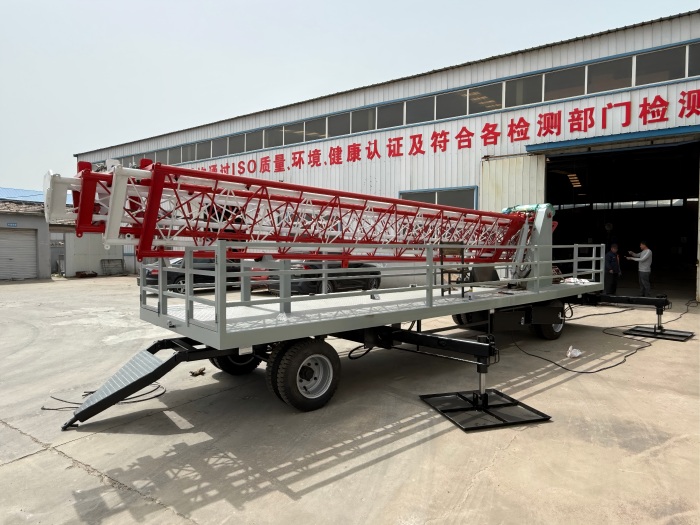
A COW is a self-contained unit. It arrives on a trailer or truck, deploys its hydraulic outriggers, raises a telescopic mast, and connects to a power source or onboard generator. Site preparation is minimal, often requiring only a flat, accessible surface.
· Typical Deployment: 1 to 4 hours.
· Use Case: Unplanned events, natural disasters, or temporary construction sites where immediate coverage is critical.
Permanent Cell Tower
A permanent tower requires extensive site planning, zoning approvals, geotechnical surveys, and concrete foundation construction. The steel tower is then erected using cranes or helicopters.
· Typical Deployment: 3 to 6 months (including permitting and civil works).
· Use Case: Long-term macro-cell coverage where the network will operate for years or decades.
The financial models for COWs and permanent towers are fundamentally different.
COW Economics: You avoid the heavy costs of land acquisition and concrete foundations. However, you must pay for the trailer/vehicle, ongoing maintenance of the deployment mechanism, and high fuel costs if operating off-grid. If you are renting a COW, daily rates can range from hundreds to thousands of dollars.
Permanent Tower Economics: The initial CAPEX is high (land, civil works, steel fabrication, erection). However, once built, the tower requires minimal maintenance (especially if hot-dip galvanized to ASTM A123) and connects directly to the local power grid, resulting in highly predictable and low OPEX.
The structural engineering of these two assets reflects their different missions.
Permanent Towers: Built for Heavy Loads
Permanent angle steel or monopole towers are designed to support multiple operators, massive 5G MIMO antennas, heavy microwave backhaul dishes, and years of environmental stress. They utilize deep foundations and heavy steel members (e.g., Q355B) to maintain strict deflection limits and prevent vibration.
COWs: Built for Mobility
COW structures use high-strength, lightweight steel and telescopic or modular designs. Because they lack deep concrete foundations, their wind resistance and payload capacity are strictly limited by the physics of their ballast or hydraulic outrigger system. A COW typically supports only a fraction of the equipment weight of a permanent tower.
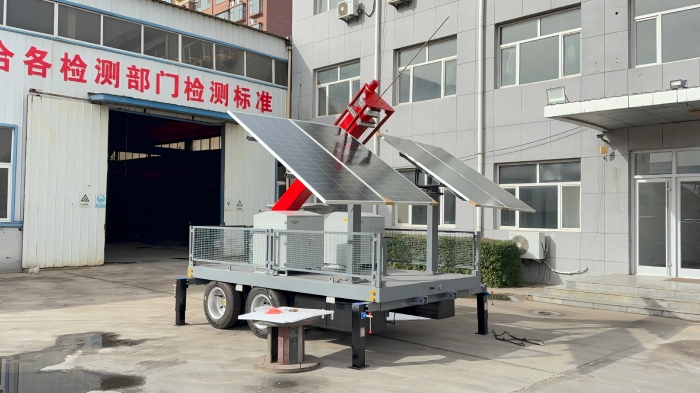
Whether your project requires a temporary rapid-deployment solution or a permanent, heavy-duty structure, the manufacturing quality and structural engineering remain paramount.
At Altai Tower, we integrate advanced design and precision manufacturing into both fixed and deployable infrastructure:
· Structural Analysis for Stability: For both permanent and mobile structures, our engineers use advanced software (like SAP2000) to model wind loading and dynamic stability. For COWs, we simulate the exact center of gravity and outrigger load to ensure the telescopic mast doesn't tip under wind gusts.
· High-Strength Materials: Whether fabricating a 60-meter permanent lattice tower or a 20-meter deployable mast, we utilize high-strength structural steel (such as Q355B) to ensure maximum strength-to-weight ratios.
· Precision CNC Fabrication: For permanent towers, we rely on CNC drilling to ensure perfect field assembly. For deployable COW frames, CNC precision is critical to guarantee that hinged joints, telescopic sections, and quick-connect plates operate seamlessly under field conditions.
· Hot-Dip Galvanizing (ASTM A123): COWs often operate in harsh post-disaster environments, and permanent towers face decades of weather. Our in-house hot-dip galvanizing ensures that both types of structures are protected against rust and corrosion, maintaining their structural integrity over time.
| Parameter | Cellular on Wheels (COW) | Permanent Cell Tower |
|---|---|---|
| Deployment Time | 1 to 4 hours | 3 to 6 months |
| Foundation | None / Outriggers / Ballast | Deep concrete foundation |
| Typical Height | 10m – 30m | 30m – 100m+ |
| Payload Capacity | Limited (Single operator, light array) | High (Multi-operator, heavy 5G arrays) |
| Wind Rating | Lower (Dependent on deployment site) | Engineered for extreme wind/ice (e.g., 200+ km/h) |
| CAPEX | Low | High |
| OPEX | High (Fuel, maintenance, rental) | Low (Grid power, minimal maintenance) |
| Best Application | Events, disaster recovery, temporary sites | Long-term network coverage, urban/rural densification |
Q1: Can a COW be used as a permanent replacement for a cell tower?
A: Generally, no. While a COW can be left in place for extended periods (weeks or months), it is not designed for permanent deployment. It lacks the payload capacity for multi-operator 5G equipment, and the ongoing fuel and maintenance costs make it economically unviable compared to building a fixed tower.
Q2: How much wind can a COW withstand?
A: The wind rating of a COW depends on its specific design, mast height, and ballast system. While some deployable masts can withstand 150 km/h winds when fully deployed, they must often be retracted or lowered during extreme storms, whereas permanent towers are engineered to survive extreme winds (e.g., 200+ km/h) fully loaded.
Q3: What is the typical lifespan of a permanent angle steel tower?
A: If properly designed and hot-dip galvanized according to ASTM A123 (with a minimum 85 μm zinc coating), a permanent steel lattice tower can provide 30 to 50 years of maintenance-free service life.
Q4: Do I need special permits for a COW?
A: Permitting for COWs is usually much faster and less restrictive than for permanent towers. Because they are temporary structures, they often fall under different zoning regulations, though local rules vary and must be checked for each event or emergency deployment.
Q5: Can Altai Tower design a custom structural trailer for a COW?
A: Yes. We engineer and fabricate customized steel components for mobile structures, including heavy-duty chassis frames, telescopic mast sections, and reinforcing plates, ensuring they meet the dynamic stresses of transport and deployment.
Choosing between a Cellular on Wheels and a permanent cell tower is a decision based on time, budget, and permanence. COWs provide unmatched agility for short-term, critical communication needs, while permanent towers deliver the structural integrity and economic efficiency required for long-term network infrastructure.
At Altai Tower, we possess the engineering expertise and manufacturing capabilities to support both. From precision CNC fabrication and high-strength steel processing to rigorous hot-dip galvanizing, we ensure that whether your structure is built to roll or built to stay, it is built to perform.
Ready to discuss your infrastructure needs? Contact our engineering team today. Whether you are planning a rapid deployment fleet or a permanent network rollout, provide us with your specifications, and we will deliver a customized engineering and fabrication solution.



 Réseau IPv6 pris en charge