

 English
 русский
 español
 العربية
Recherche
Qu\'est-ce que tu cherches?
Recherche
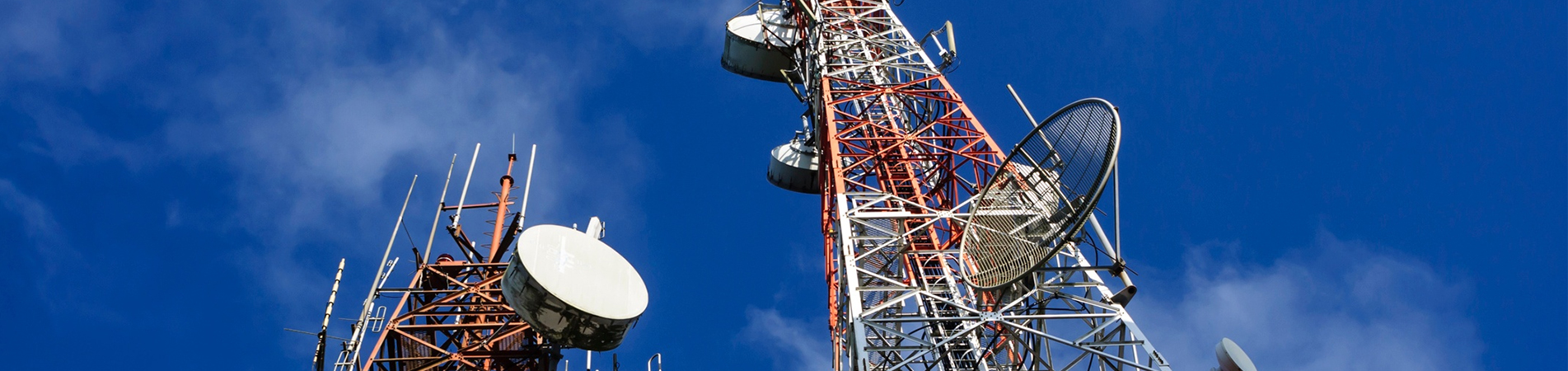
La confrontation entre connectivité numérique et préservation de la nature est l'un des défis majeurs de notre époque en matière d'infrastructures. Les parcs nationaux, les réserves naturelles et les paysages pittoresques comptent parmi les trésors les plus précieux de la planète, mais aussi parmi les plus dangereux pour les visiteurs dépourvus de moyens de communication fiables. Alors que les opérateurs de réseaux mobiles cherchent à étendre leur couverture à ces zones écologiquement sensibles, ils se heurtent à un adversaire redoutable : ce qui fait la singularité même de ces lieux. La solution ne réside pas dans une infrastructure déployée de manière démesurée, mais dans… Discrétion, sensibilité et conception stratégique.

Les zones écologiquement sensibles présentent un paradoxe unique. Les visiteurs recherchent la sécurité et la commodité des communications modernes, mais viennent précisément pour échapper à la pollution visuelle des milieux bâtis. Les directeurs des parcs nationaux, les commissions d'aménagement du territoire et les autorités de conservation doivent concilier deux impératifs contradictoires : la sécurité publique et la préservation des paysages.
L'enjeu est de taille. Dans le parc national de Taroko, à Taïwan, les autorités ont invoqué « l'amélioration des communications et des secours en cas de catastrophe » comme principale justification du déploiement d'une tour camouflée près du site d'alpinisme du mont Pingshan. Les sommets isolés de la chaîne centrale, qui comptent 27 pics de plus de 3 000 mètres, suscitent une inquiétude croissante depuis l'augmentation du nombre d'alpinistes suite à la politique d'ouverture des montagnes du gouvernement. En cas d'accident, chaque minute de retard dans la communication peut être fatale.
L'opposition est tout aussi passionnée. Lorsque Verizon a sollicité l'autorisation d'installer une antenne-relais de 42 mètres (138 pieds) dans le parc national de Sequoia, en Californie, une consultation publique d'un mois a révélé de profondes divisions. Les détracteurs ont fait valoir que l'ajout d'un réseau cellulaire « pourrait nuire à l'une des principales raisons qui attirent de nombreux visiteurs : la solitude ». L'évaluation du Service des parcs nationaux a elle-même reconnu les préoccupations relatives à « la solitude, l'autonomie, les paysages sonores naturels et la possibilité de se déconnecter des technologies ».
La tâche n'est donc pas seulement technique ; elle est diplomatique, écologique et esthétique.
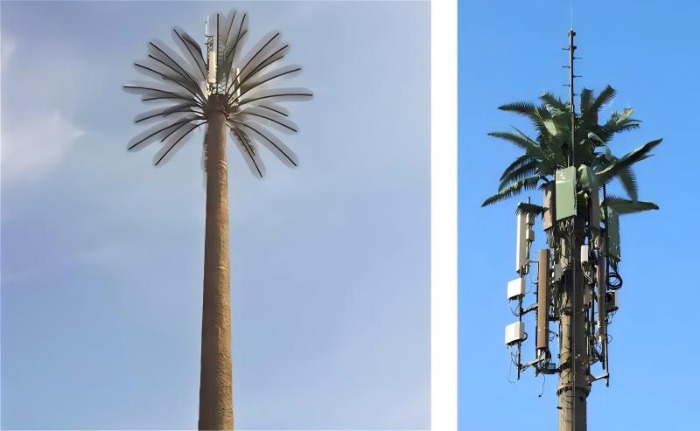
tours de camouflage — souvent appelées « monopines », « monopalmes » ou simplement « faux arbres » — représentent le summum du compromis esthétique. Leur principe fondamental est simple : si une tour doit exister, elle ne doit pas en avoir l’apparence.
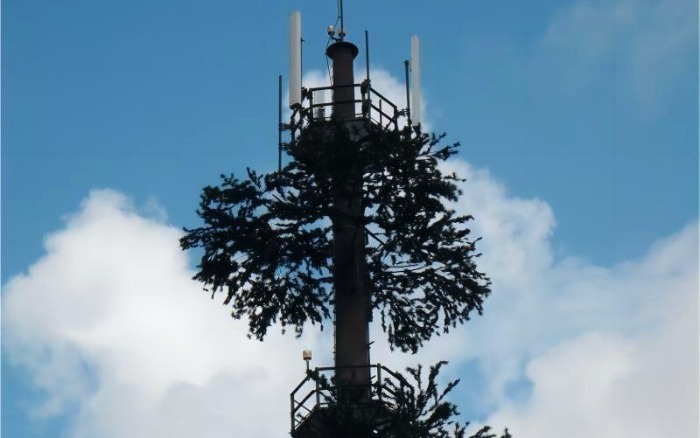
Le choix de l'essence de bois est la décision de conception la plus cruciale. Une tour imitant un arbre absent de l'écosystème local peut être plus choquante qu'une structure en acier apparente.
Le parc national de Dartmoor, au Royaume-Uni, offre un exemple édifiant. Un projet d'installation d'un faux mât en cyprès a été rejeté précisément parce que le cyprès de Lawson est une espèce exotique qui détonnerait totalement dans ces champs bordés de forêts de feuillus. L'inspecteur de l'urbanisme a souligné que la structure serait visible depuis de nombreux points de vue publics et serait encore plus apparente en hiver, une fois les arbres dénudés. Le besoin de communication pour les services d'urgence (via le réseau Airwave TETRA) a été jugé insuffisant pour justifier l'atteinte au caractère et à l'esthétique du parc national.
À l'inverse, les déploiements réussis privilégient l'authenticité. Dans la région du parc national d'Acadia, dans le Maine, la filiale d'AT&T, New Cingular Wireless, a obtenu l'autorisation d'installer une tour de 38 mètres de haut en pin blanc sur un terrain privé à Otter Creek. Le pin blanc est une essence indigène de la région, et la conception a été soigneusement coordonnée avec les responsables du parc et de la municipalité afin de garantir qu'elle n'altère en rien le paysage.
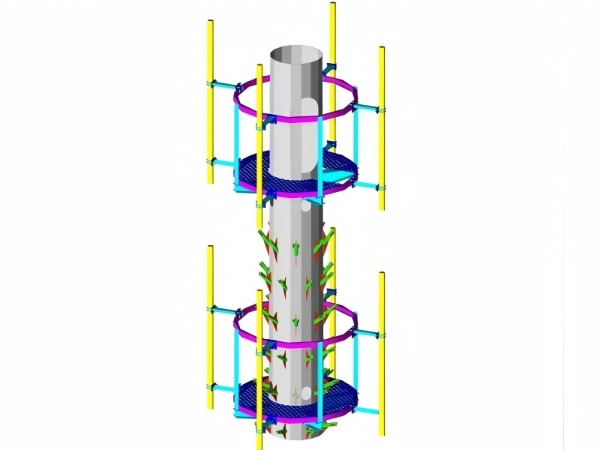
Les tours de camouflage modernes sont généralement construites à partir de plastique renforcé de fibres de verre (PRFV) Pour les éléments du tronc et du feuillage, la « station de base en faux arbre » du parc national de Taroko, construite pour un coût dépassant 1 million de NT$ (environ 32 000 USD) grâce à une collaboration entre deux entreprises de télécommunications, utilise la construction en PRV pour obtenir à la fois une intégrité structurelle et une texture réaliste.
Le matériau doit satisfaire à trois exigences contradictoires :
Durabilité permettant de résister à des décennies d'exposition aux UV, au vent et aux précipitations
Fidélité esthétique pour reproduire la texture de l'écorce, les motifs des branches et la couleur du feuillage
Transparence RF pour garantir que le matériau de dissimulation n'atténue ni ne déforme les signaux qui le traversent.
Les fabricants de pointe proposent désormais des technologies en instance de brevet comme InvisiWave ™ qui peut dissimuler même les équipements à ondes millimétriques 5G « sans dégrader leurs performances et leur couverture ».

L'obtention d'une autorisation de construire dans un parc national ou une réserve naturelle est fondamentalement différente d'une procédure d'approbation de zonage classique. Ce processus exige une coordination entre plusieurs organismes, une évaluation environnementale et, souvent, un contrôle législatif.
Dans le parc national royal australien, un projet de tour de télécommunications Telstra a fait l'objet d'une procédure formelle. Examen des facteurs environnementaux (REF) Ce processus, documenté dans un rapport exhaustif de 6,46 Mo déposé auprès du gouvernement de Nouvelle-Galles du Sud, examinait les impacts potentiels sur les parcs, les réserves et les zones protégées et établissait le cadre des mesures d'atténuation.
La loi sud-africaine sur la gestion de l'environnement (NEMA) exige explicitement qu'« une tour de télécommunications de plus de 15 mètres fasse l'objet d'une évaluation d'impact environnemental ». Le non-respect de cette obligation peut entraîner des poursuites, comme l'illustre la plainte déposée par l'Alliance démocratique concernant une tour illégale de 45 mètres érigée à Harrismith sans consultation publique préalable ni évaluation patrimoniale.
Le processus d'approbation du parc national de Sequoia a révélé la complexité de la consultation publique. Bien qu'une majorité de personnes se soient opposées à la tour pendant la période de consultation, le Service des parcs nationaux a procédé à l'approbation après une analyse d'équilibre nuancée. La recommandation du surintendant Woody Smeck concluait que « l'alternative retenue n'aura pas d'incidence significative sur la qualité de l'environnement humain ni sur les ressources culturelles ou naturelles du parc ».
La décision finale de l'agence a explicitement mis en balance les valeurs concurrentes :
« Le NPS a déterminé que les avantages à long terme en matière de santé, de sécurité et de communication associés à l’amélioration des communications » — y compris une meilleure capacité à signaler les urgences — « l’emportent sur les perturbations que certains visiteurs pourraient subir en raison de l’utilisation de téléphones portables par d’autres visiteurs dans les espaces publics ».
Ce raisonnement s'accompagnait d'un engagement en faveur d'un « programme d'éducation du public visant à promouvoir une utilisation responsable des téléphones portables dans les espaces et installations publics partagés », reconnaissant que l'infrastructure elle-même ne représente qu'une partie de l'équation.
Le choix du bon emplacement au sein d'une zone sensible peut déterminer la réussite ou l'échec d'un projet. Les stratégies clés comprennent :
Proximité des aménagements existants : La tour Sequoia a été implantée près du village de Wuksachi, une zone commerciale existante, plutôt qu'en pleine nature vierge. Cette infrastructure concentrée se situait dans un environnement où l'impact humain était déjà présent.
Emplacement en bordure de forêt : Un mât projeté dans la forêt de Lisnagra en Irlande serait installé « à environ 35 mètres de la route locale voisine », les épicéas de Sitka existants masquant la majeure partie de la structure, à l'exception de la partie supérieure qui s'élève au-dessus de la limite des arbres.
Atténuation par la conservation de la végétation : La proposition irlandaise comprenait un engagement à « préserver définitivement la forêt autour de la tour » comme mesure d’atténuation visuelle.
L’impact visuel est la préoccupation la plus évidente, mais une évaluation environnementale complète doit aborder de multiples dimensions.
Les travaux de construction dans les zones sensibles peuvent perturber le sol, endommager les systèmes racinaires et introduire des espèces envahissantes par le biais des engins de chantier. Les mesures d'atténuation comprennent :
Planifier les travaux de construction en fonction des périodes de reproduction de la faune sauvage
Utiliser les routes et les sentiers existants pour l'accès
Mise en œuvre de protocoles stricts de lavage des véhicules pour prévenir le transport des semences
Restauration des zones perturbées avec de la végétation indigène
Les tours nécessitent un entretien périodique, et certaines installations sont équipées de générateurs de secours. Ces derniers peuvent introduire de la lumière et du bruit dans des environnements auparavant sombres et silencieux. Voici quelques solutions :
Réduire au minimum l'éclairage extérieur et utiliser des luminaires protégés à détection de mouvement.
Spécification des groupes électrogènes à faible bruit avec enceintes insonorisées
Restriction des activités d'entretien nocturnes
Les commentaires du public concernant le projet Sequoia ont notamment fait état d'« inquiétudes quant à l'exposition aux fréquences électromagnétiques émises par la tour ». Si le consensus scientifique soutient le respect des normes de sécurité, la prise en compte de la perception du public nécessite :
Communication transparente des données d'émissions RF
Conformité aux normes de la FCC ou aux normes nationales équivalentes
Sensibilisation éducative expliquant la différence entre l'exposition en champ proche et en champ lointain
Pour en savoir plus, consultez www.alttower.com



 Réseau IPv6 pris en charge