

 English
 русский
 español
 العربية
Recherche
Qu\'est-ce que tu cherches?
Recherche

Dans le secteur concurrentiel de la fabrication de tours, où l'acier de construction peut représenter une part importante du coût d'un projet, chaque gain d'efficacité dans la chaîne d'approvisionnement se traduit directement par une amélioration des marges et de la compétitivité. Bien que la supériorité technique de galvanisation à chaud (HDG) L'efficacité de la protection contre la corrosion est incontestable, mais son application économique représente souvent un défi logistique.
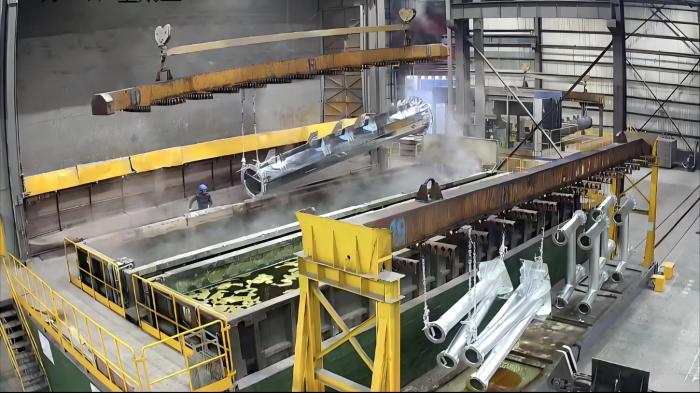
Le modèle de galvanisation des composants tour par tour ou par petits lots est intrinsèquement inefficace. Le passage stratégique à la galvanisation en masse – le traitement coordonné des composants provenant de plusieurs tours au cours d'une seule production à grande échelle – permet de réaliser d'importantes économies d'échelle. Cette approche n'est pas une simple tactique d'approvisionnement ; il s'agit d'une démarche sophistiquée de planification de la production, de synchronisation logistique et de maîtrise des coûts totaux qui réduit considérablement le coût par tonne d'acier protégé.
Ce blog analyse les mécanismes économiques de la galvanisation en masse, en expliquant comment les fabricants et les gestionnaires de grands projets peuvent tirer parti des économies d'échelle pour transformer un processus de protection contre la corrosion nécessaire en une source d'avantage concurrentiel.
Pour apprécier les économies réalisées grâce au traitement en vrac, il faut d'abord comprendre les composantes du coût de la galvanisation à chaud. Le prix est rarement une simple fonction linéaire du poids. Les principaux facteurs sont les suivants :
Charge de la bouilloire (bain) : Des frais fixes ou minimums importants sont prévus pour couvrir les coûts énergétiques et opérationnels de chauffage et d'entretien du bain de zinc, quelle que soit la taille de la charge.
Manutention et fixation : Main-d'œuvre pour la mise en place, le câblage et le montage des composants en vue de leur immersion. Les petits lots complexes nécessitent un temps de manutention proportionnellement plus important par tonne.
Consommation de zinc : Le coût réel du zinc métal, consommé en fonction de la surface de l'acier.
Post-traitement : Coûts liés à la trempe, à l'inspection et aux éventuelles finitions mineures.
L'idée essentielle est que Les frais de bouilloire et de manutention sont en grande partie fixes ou semi-fixes. Répartir ces coûts sur un tonnage plus important réduit considérablement leur contribution au coût unitaire.
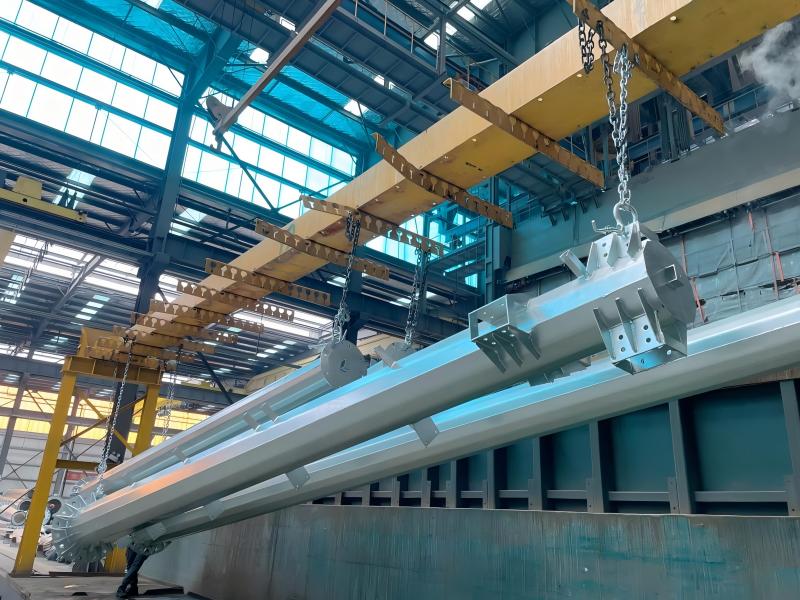
L'avantage économique de la galvanisation en masse se manifeste par plusieurs gains d'efficacité simultanés :
Amortissement des coûts fixes : L'économie la plus significative réside dans le coût fixe de la cuve, qui peut rendre un lot de 5 tonnes excessivement coûteux à la tonne. Ce coût devient négligeable pour des lots de 50 ou 100 tonnes, ce qui réduit directement le coût moyen de traitement.
Utilisation optimisée de la bouilloire : Les usines de galvanisation fonctionnent de manière optimale et garantissent une composition chimique du zinc parfaitement homogène lorsque le bain de galvanisation est maintenu proche de sa capacité maximale et à une température de fonctionnement stable. Les commandes en gros permettent à l'usine de fonctionner en continu à pleine capacité, minimisant ainsi le gaspillage d'énergie par tonne produite. Cette efficacité opérationnelle se traduit souvent par un prix plus avantageux proposé par le galvaniseur.
Manutention et logistique réduites : Le traitement simultané des composants de plusieurs tours permet un rangement systématique, de type chaîne de montage. Les composants similaires peuvent être regroupés sur les mêmes supports ou gabarits, ce qui réduit considérablement le temps improductif consacré à la préparation et à la manutention par rapport à de nombreux petits lots disparates.
Tarification du zinc en fonction du volume : Une consommation importante et prévisible de zinc permet aux fabricants ou à leurs partenaires de galvanisation de négocier de meilleures conditions pour les achats de zinc en vrac, réduisant ainsi un coût variable clé.
Exemple de comparaison des coûts :
| Composante de coût | Petit lot (10 tonnes) | Traitement en vrac (50 tonnes) | Impact |
|---|---|---|---|
| Bouilloire/Charge fixe | $X (alloué à 10T) | ~X $ (alloué à 50T) | Coût par tonne réduit de 80 %. |
| Manutention et main-d'œuvre | Élevé (configurations multiples) | Inférieur (configuration consolidée) | L'efficacité du travail augmente de 30 à 50 %. |
| Coût du zinc | tarif standard | Possibilité de tarif préférentiel | Réduction marginale des coûts variables. |
| Transport | Plusieurs voyages à l'usine | Expéditions groupées | Coûts de transport par tonne inférieurs. |
| Coût moyen total par tonne | $Y | 0,65 $Y - 0,75 $Y | Des économies importantes par tonne ont été réalisées. |
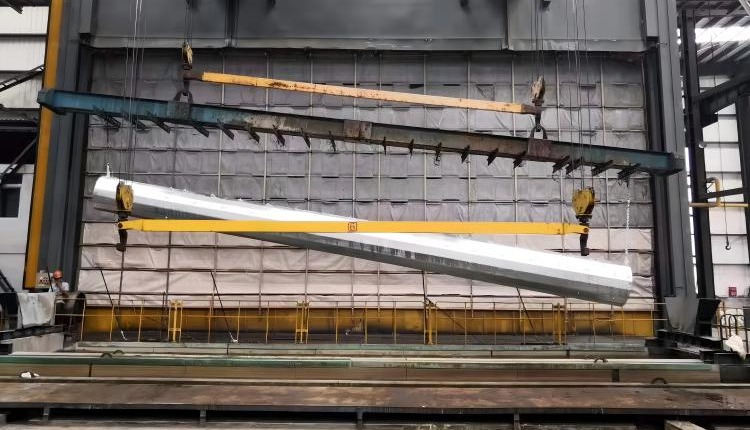
La réalisation de ces économies n'est pas automatique ; elle nécessite une coordination délibérée et compétente — une véritable approche de conception pour la fabrication et la logistique (DFML) appliquée au niveau du portefeuille de projets.
1. Planification de la production et normalisation de la conception :
Bibliothèque de conception modulaire : L'utilisation d'une bibliothèque de détails de connexion standardisés, de goussets et de dimensions d'éléments pour différents modèles de tours garantit une grande similarité des pièces. Cette similarité sert de matière première pour le traitement en série, permettant la galvanisation de milliers de supports ou d'entretoises identiques en une seule opération optimisée.
Séquençage de la fabrication : Le calendrier de l'atelier doit être synchronisé avec celui du galvaniseur. Cela implique de fabriquer et de préassembler à l'avance les composants de plusieurs tours afin de constituer une quantité suffisante pour un trempage en masse, plutôt que de terminer une tour à la fois.
Préparation et étiquetage : Les composants des différentes tours doivent être méticuleusement emballés, étiquetés et documentés (par exemple, avec des marquages de peinture ou des étiquettes RFID qui résistent au processus de galvanisation) afin de garantir qu'ils puissent être correctement triés et dirigés vers leurs chaînes d'assemblage respectives après galvanisation.
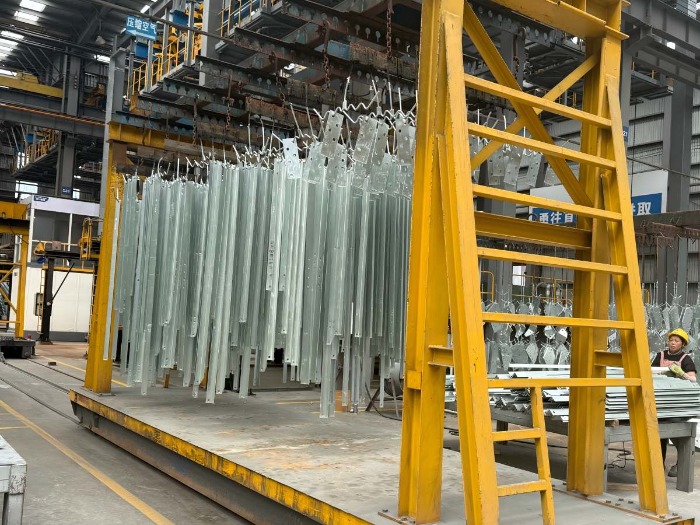
2. Synchronisation de la logistique et de la chaîne d'approvisionnement :
Transport consolidé : Coordonner l'enlèvement et la livraison de 50 tonnes d'acier en quelques convois exceptionnels est bien plus rentable que de gérer 10 envois de 5 tonnes chacun. Cela nécessite une planification rigoureuse des semi-remorques plateaux et, éventuellement, une aménagement du stockage sur site.
Gestion des stocks tampons : Le processus de fabrication en série génère naturellement un stock tampon de composants galvanisés. Il est impératif d'en tenir compte et d'aménager des zones de stockage organisées sur le site de fabrication. Paradoxalement, ce stock tampon peut améliorer le déroulement global du projet en dissociant les calendriers de fabrication et de galvanisation du calendrier de montage final, offrant ainsi une plus grande flexibilité.
Stratégie contractuelle : Un partenariat avec un grand fabricant de galvanisation, dans le cadre d'un accord-cadre à long terme ou portant sur plusieurs projets, garantit des capacités de production et des tarifs avantageux. La relation passe ainsi d'une approche transactionnelle à une approche stratégique.
Pour les fabricants de tours et les grands entrepreneurs en infrastructures, passer à un modèle de galvanisation en vrac Il s'agit d'une mise à niveau opérationnelle stratégique. Elle transforme HDG, d'un centre de coûts par projet, en un processus de chaîne de valeur à effet de levier où l'échelle est activement gérée pour générer des profits.
Les avantages vont bien au-delà d'une simple réduction des coûts unitaires. Ils favorisent une plus grande standardisation de la conception, imposent une discipline bénéfique à la planification de la production, renforcent les partenariats avec les fournisseurs et, en fin de compte, permettent d'obtenir un coût total de projet plus prévisible et compétitif. Dans un secteur où la durabilité et le coût sont primordiaux, la maîtrise des économies d'échelle en matière de protection contre la corrosion n'est pas seulement un atout, c'est une condition essentielle à la réussite à long terme. Les tours les plus durables ne sont pas seulement celles construites avec le meilleur acier, mais aussi celles qui bénéficient de la protection la plus économique.
Pour en savoir plus, consultez www.alttower.com



 Réseau IPv6 pris en charge