

 English
 русский
 español
 العربية
Recherche
Qu\'est-ce que tu cherches?
Recherche

tours de guet d'observation Ces systèmes répondent aux exigences les plus élevées des secteurs des télécommunications et de la sécurité : surveillance des frontières, sécurité périmétrique des prisons, détection des incendies de forêt et protection des infrastructures critiques. Ils sont déployés dans certains des environnements les plus hostiles de la planète : zones côtières à l’air salin, zones industrielles polluées par des produits chimiques et avant-postes montagneux isolés, soumis à des cycles de gel-dégel répétés pendant des décennies.
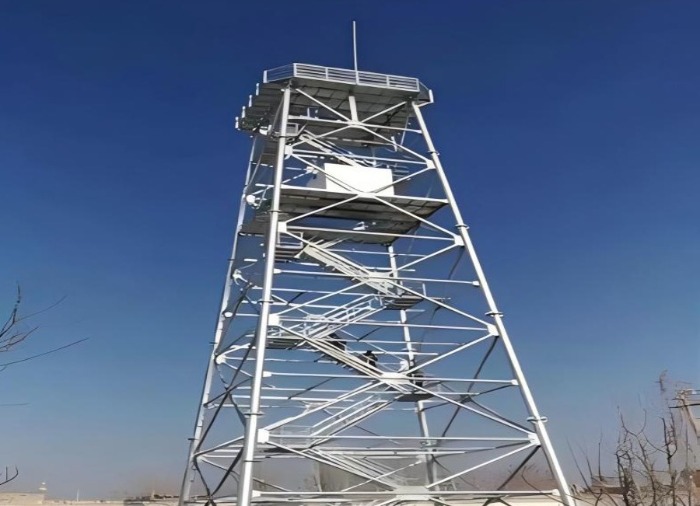
Leur mission exige une surveillance humaine 24h/24 et 7j/7, ce qui signifie que la structure métallique qui la supporte doit rester sûre, stable et sans entretien pendant des décennies. Le choix technique qui détermine si une tour de guet répond à cette norme ou tombe en panne prématurément ne repose pas sur l'épaisseur de son acier, mais sur l'intégrité de son système de protection contre la corrosion. Parmi toutes les options disponibles, galvanisation à chaud ASTM A123 (HDG) Elle représente la solution métallurgique la plus fiable, scientifiquement prouvée et rentable pour garantir une véritable longévité structurelle, non seulement sur le papier, mais aussi sur des décennies d'utilisation réelle.
Contrairement aux équipements industriels intérieurs ou aux bâtiments abrités, les tours de guet d'observation ne bénéficient d'aucune protection contre les intempéries. Elles sont exposées à une combinaison implacable d'agressions environnementales : rayonnement ultraviolet qui dégrade les revêtements organiques ; pluies battantes et humidité favorisant une humidité persistante ; chlorures atmosphériques en zone côtière qui accélèrent la corrosion électrochimique ; températures extrêmes induisant une dilatation et une contraction thermiques ; et, en zones industrielles, dioxyde de soufre et autres polluants qui attaquent l'acier et le zinc. La défaillance d'une tour de guet représente non seulement une perte matérielle, mais aussi une faille de sécurité et une menace pour la sécurité du personnel.
ASTM A123/A123M Cette norme est la spécification nord-américaine de référence pour le revêtement de zinc (galvanisation) par immersion à chaud des produits en fer et en acier, qu'il s'agisse de profilés laminés, pressés ou forgés, de pièces moulées, de plaques, de barres ou de bandes. Le respect de cette norme garantit que l'acier a subi un processus rigoureux en plusieurs étapes : dégraissage pour éliminer les contaminants organiques, décapage acide pour éliminer la calamine et la rouille, fluxage pour favoriser la liaison métallurgique, immersion dans un bain de zinc fondu à environ 450 °C, puis retrait et refroidissement contrôlés.
La disposition technique la plus critique de la norme est sa exigences minimales d'épaisseur moyenne de revêtement , classés par catégorie de matériau et épaisseur d'acier mesurée. Pour les profilés structuraux — les principaux composants des pieds, des contreventements et des plateformes des tours de garde — les spécifications du tableau 1 de la norme ASTM A123 sont sans équivoque : l'acier d'une épaisseur mesurée supérieure à 6,4 mm (environ 1/4 de pouce) nécessite un épaisseur moyenne minimale du revêtement, note de 100 Cela correspond à une épaisseur de revêtement de zinc de 100 µm (0,100 mm ou environ 3,9 mils). Pour les sections plus épaisses, supérieures à 16 mm (5/8 pouce) – typiques des colonnes de base des grandes tours d'observation –, cette même épaisseur de 100 µm s'applique. Cette épaisseur n'est pas arbitraire ; elle représente la réserve de zinc déterminée scientifiquement, calculée pour assurer une protection sacrificielle pendant des décennies, même dans les environnements les plus extrêmes.
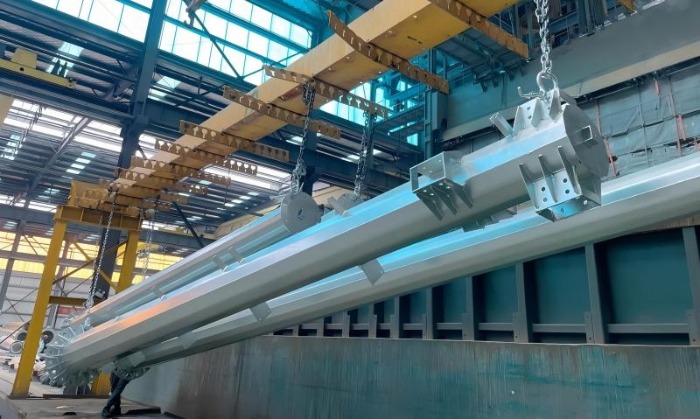
La supériorité de la galvanisation à chaud sur les systèmes de peinture ou de revêtement en poudre réside dans son protection triple couche stratégie. Aucun autre système de protection contre la corrosion n'offre ce niveau de défense intégrée.
Le revêtement de zinc forme une « armure de zinc » dense et imperméable qui isole physiquement l'acier sous-jacent des agents corrosifs : humidité, chlorures, sulfates et polluants atmosphériques. Contrairement aux revêtements organiques poreux qui laissent passer la vapeur d'eau au fil du temps, les couches d'alliage zinc-fer, liées métallurgiquement, sont continues, uniformes et présentent une adhérence supérieure à 3 800 psi. Les exigences strictes de la norme ASTM A123 concernant l'épaisseur du revêtement garantissent que cette barrière possède une masse suffisante pour résister à des décennies d'agressions environnementales sans piqûres ni défaillances localisées.
C’est ce mécanisme qui distingue la galvanisation de tous les systèmes de protection par simple barrière. Le zinc est électrochimiquement plus actif que l’acier, occupant une position plus élevée dans la série galvanique. Lorsqu’une surface d’acier galvanisé est exposée à un électrolyte (humidité contenant des sels dissous), des différences de potentiel électrique apparaissent et une cellule électrolytique se forme. Le zinc devient l’anode pour toute la surface de l’acier, empêchant ainsi la formation de petites zones anodiques et cathodiques sur l’acier lui-même. Les électrons, chargés négativement, circulent de l’anode de zinc vers la cathode d’acier, et les atomes de zinc à l’anode sont convertis en ions zinc, chargés positivement, et lentement consommés – se sacrifiant ainsi pour protéger l’acier.
L'implication cruciale pour les tours de garde est majeure : lorsqu'un revêtement est rayé, percé ou endommagé accidentellement — ce qui est inévitable lors du transport, de la manutention, du soudage sur site ou de la maintenance courante —, le zinc environnant assure une protection cathodique à l'acier exposé, empêchant ainsi la corrosion sous-jacente. Tant qu'il reste du zinc à proximité de la zone endommagée, l'acier ne rouille pas. Cette propriété d'auto-réparation est propre à la galvanisation et aux autres systèmes sacrificiels à base de zinc. Les revêtements organiques n'offrent pas une telle protection ; dès qu'une rayure pénètre la peinture jusqu'à l'acier nu, la corrosion s'amorce et se propage rapidement sous le revêtement, restant invisible jusqu'à ce qu'une défaillance importante survienne.
Au fil du temps, la surface du zinc réagit avec l'oxygène atmosphérique, l'humidité et les polluants pour former une couche stable et adhérente de sels de zinc : la patine. Cette patine ralentit encore la corrosion de la couche de zinc, offrant ainsi une troisième barrière de protection qui s'améliore avec l'âge au lieu de se détériorer.
L'industrie de la protection anticorrosion a mis au point des modèles prédictifs sophistiqués pour les revêtements galvanisés, permettant aux ingénieurs de spécifier avec précision les revêtements adaptés à chaque lieu d'application. La norme ISO 9223 classe la corrosivité atmosphérique en six zones selon les taux de corrosion mesurés sur des métaux de référence après un an d'exposition.
| Catégorie de corrosion | Environnement typique | Taux de corrosion du zinc (μm/an) | Durée de vie prévue pour l'acier de plus de 6 mm (ISO 1461) |
|---|---|---|---|
| C1 | Séchage à l'intérieur | ≤0,1 | Plus de 100 ans |
| C2 | Zones rurales arides/intérieures | >0,1 à ≤0,7 | 78 à plus de 100 ans |
| C3 | Côtière ou industrielle | >0,7 à ≤2,1 | de 26 à 78 ans |
| C4 | Bord de mer calme | >2,1 à ≤4,2 | 13 à 26 ans |
| C5 | Surf sur la plage | >4,2 à ≤8,4 | 7 à 13 ans |
| CX | En mer | >8,4 à ≤25 | 2 à 7 ans |
Pour les tours de guet, la durée de vie du revêtement galvanisé est essentiellement proportionnelle à son épaisseur. Un revêtement de zinc de 100 µm conforme à la norme ASTM A123 et adapté à la classification environnementale du site offre une durée de vie prévisible et quantifiable avant toute intervention de maintenance. L'outil AGA Zinc Coating Life Predictor, un logiciel gratuit utilisant plus de 3 000 points de données de tests de corrosion réels provenant de sites du monde entier, permet aux ingénieurs de saisir des paramètres spécifiques au site, tels que les précipitations annuelles, la salinité atmosphérique (chlorures), la concentration en dioxyde de soufre, l'humidité relative, la température moyenne et les conditions d'abri, afin d'estimer avec précision le délai avant la première maintenance. Ce niveau de prédiction est impossible à atteindre pour les systèmes de peinture, dont la défaillance est imprévisible en raison de la dégradation par les UV, des infiltrations d'humidité au niveau des micro-perforations et de la corrosion localisée sous le film.
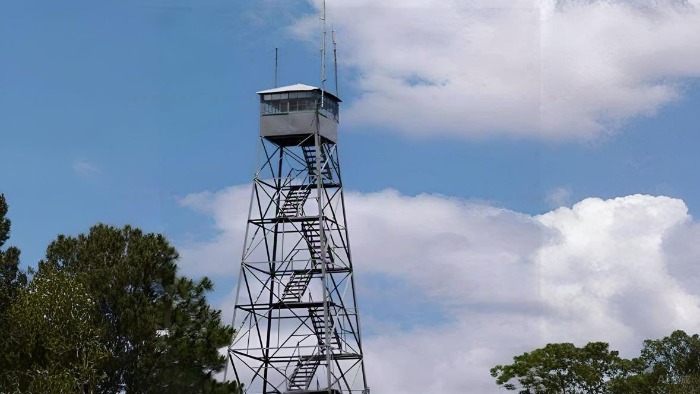
Pour les tours de guet déployées dans les environnements les plus agressifs (postes de contrôle frontaliers côtiers, tours de sécurité portuaires et installations offshore), le milieu marin C5 (subtropical à tropical, avec d'importants dépôts de chlorures dus aux embruns, situé à quelques centaines de mètres du rivage) représente l'épreuve ultime pour tout système de protection contre la corrosion. Dans ces conditions C5, les taux de corrosion du zinc sont estimés à 4 à 8 μm par an Cela signifie qu'un revêtement standard de 85 μm offre une durée de vie d'environ 10 à 20 ans avant la première maintenance. L'exigence de 100 μm de la norme ASTM A123 pour les pièces de structure étend encore cette durée de vie prévisible. Dans les environnements côtiers légèrement moins agressifs (classification C4), avec des taux de corrosion estimés de 2 à 4 μm par an, la même épaisseur de revêtement peut offrir une durée de vie d'environ 10 à 20 ans. 20 à 40 ans de protection sans entretien , la plage supérieure étant applicable aux articles manufacturés de plus grande taille et aux surfaces moins fréquemment mouillées.
Le coût initial de la galvanisation à chaud est souvent légèrement supérieur à celui d'un système de peinture bicouche classique. Cependant, le coût du cycle de vie – véritable indicateur de sa valeur économique – révèle une réalité bien différente. Une étude comparant la galvanisation à chaud à un système de peinture époxy/polyuréthane inorganique riche en zinc sur une durée de vie de 30 ans en milieu industriel a constaté que le coût de la galvanisation à chaud était d'environ 1,76 $ par pied carré**, tandis que le système de peinture multicouches coûte **6,67 $ par pied carré —près de quatre fois plus—en raison uniquement des futures opérations de peinture et de main-d'œuvre. Sur la base du cycle de vie, la galvanisation à chaud coûte environ 16 % du coût d'un système de peinture bicouche appliqué en atelier .
Ce différentiel de coût spectaculaire s'explique par trois raisons principales. Premièrement, les systèmes de peinture nécessitent un entretien régulier : des retouches tous les 5 à 10 ans et une peinture complète tous les 15 à 20 ans. Chaque opération requiert une préparation de surface poussée, des contrôles environnementaux et une main-d'œuvre qualifiée. La galvanisation à chaud (HDG), quant à elle, ne nécessite aucun entretien pendant des décennies. Deuxièmement, la peinture ne protège pas les surfaces internes des profilés creux, des soudures et des interstices, précisément là où la corrosion se développe. La HDG, grâce à son revêtement intérieur et extérieur, offre une protection métallurgique complète. Troisièmement, les surfaces peintes sont vulnérables à la dégradation par les UV, aux dommages mécaniques liés à la manutention sur site et à la propagation de la corrosion sous-jacente. Les couches d'alliage zinc-fer de la HDG sont exceptionnellement dures et résistantes à l'abrasion, et le mécanisme de protection cathodique empêche la corrosion sous-jacente.
Une étude de cas menée dans une centrale électrique des Caraïbes apporte une validation concrète. Initialement prévu pour un système de peinture bicouche, le projet – qui comprenait plus de 10 000 tonnes d’acier de construction – a été modifié pour une galvanisation à chaud après que le galvaniseur a présenté des données sur le coût du cycle de vie. Cette décision a permis d’économiser environ [montant manquant]. 3,57 millions de dollars — une réduction de 73 % du coût total du revêtement — tout en éliminant les risques liés au calendrier associés à la peinture sur site, tributaire des conditions météorologiques, dans un environnement côtier tropical.
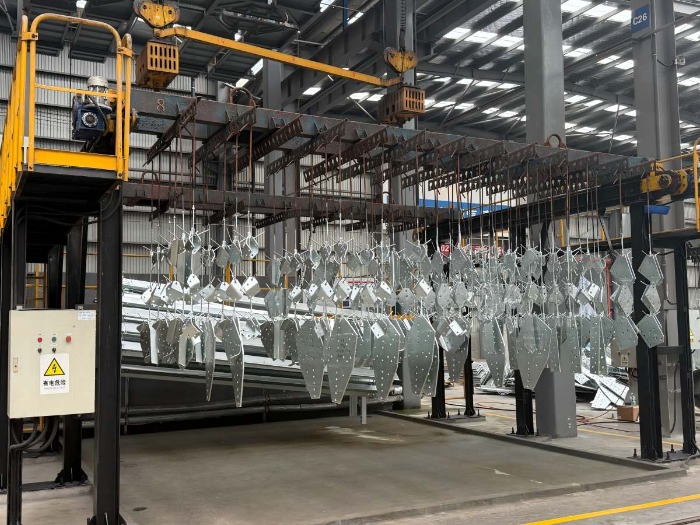
Les tours de guet modernes galvanisées à chaud sont des structures surélevées préfabriquées, conçues pour une surveillance humaine 24h/24 et 7j/7. Leur configuration typique comprend une structure stable à quatre pieds en treillis, la galvanisation à chaud assurant la protection anticorrosion. Les principales spécifications techniques – base de 3 m x 3 m, hauteurs de 6 à 12 mètres, capacité de 6 à 10 personnes et 500 kg de matériel, résistance au vent de 150 km/h (en fonctionnement) et 200 km/h (en survie), plage de températures de fonctionnement de -40 °C à +55 °C – dépendent toutes de la préservation de l'intégrité structurelle de l'acier pendant toute la durée de vie de l'installation.
Le procédé de galvanisation à chaud des tours de guet consiste à immerger la structure métallique entièrement fabriquée (poteaux, entretoises, poutres de la plateforme, garde-corps et échelle) dans un bain de zinc fondu à 450 °C. Les couches d'alliage zinc-fer qui se forment sont intégrées à l'acier et ne se contentent pas d'adhérer à sa surface. Cette liaison métallurgique garantit que les vibrations, les oscillations dues au vent et les cycles thermiques, phénomènes courants en service, n'entraînent pas de délamination du revêtement, un mode de défaillance fréquent pour la peinture sur les structures soumises à des charges dynamiques.
De plus, la surface galvanisée offre une excellente base pour les finitions thermolaquées optionnelles, permettant une intégration esthétique harmonieuse à l'environnement. Le système duplex (galvanisation à chaud et thermolaquage) a démontré qu'il prolonge la durée de vie de la galvanisation à chaud seule de 1,5 à 2 fois, tout en assurant une protection anticorrosion qu'un thermolaquage sur acier nu ne peut égaler.
La galvanisation à chaud selon la norme ASTM A123 offre un avantage indéniable pour les tours de guet, non seulement économique, mais aussi opérationnel. Une tour de guet nécessitant une nouvelle peinture tous les 10 à 15 ans oblige son propriétaire à planifier des interruptions de service, à installer des échafaudages ou des nacelles élévatrices, à manipuler des produits de revêtement dangereux en hauteur et à la mettre hors service pendant la période de peinture. Pour les tours de surveillance des frontières ou des prisons, une telle interruption est inacceptable. Une tour de guet correctement galvanisée à chaud, conformément à la norme ASTM A123 et avec une épaisseur de revêtement adaptée à la classification environnementale du site (C4, C5 ou CX), entre en service et reste exempte de corrosion pendant toute sa durée de vie prévue. Aucun cycle de maintenance. Aucune nouvelle peinture. Aucune perte de capacité structurelle due à la corrosion cachée. Mission de sécurité préservée.
Les tours de guet sont des investissements à long terme, et non des infrastructures jetables. L'acier qui les compose ne s'use pas ; il se corrode. La question de la longévité de ces structures ne se résume donc pas à un débat sur le coût initial ou sur de légères différences d'épaisseur. C'est le choix technique précis qui détermine si une tour de guet offrira un service fiable et sans entretien pendant des décennies, ou si elle deviendra un fardeau nécessitant des réparations constantes et un remplacement à terme.
La galvanisation à chaud selon la norme ASTM A123 offre l'épaisseur de barrière nécessaire pour résister à des décennies d'exposition aux intempéries, la protection cathodique pour une auto-réparation des dommages, la prévisibilité permettant de calculer la durée de vie avec précision et la rentabilité du cycle de vie justifiant l'investissement initial. Pour les périmètres pénitentiaires, les postes de surveillance frontaliers, la sécurité industrielle et la détection des feux de forêt – où la défaillance est inacceptable – le choix est évident. La norme est l'ASTM A123. Le matériau est l'acier galvanisé à chaud. Le résultat : une longévité au service de la mission.
Vous souhaitez concevoir des tours de guet d'observation garantissant des décennies de service sans entretien ? Contactez dès aujourd'hui notre équipe d'ingénieurs pour obtenir des conceptions sur mesure de tours galvanisées à chaud et une analyse de protection anticorrosion adaptée à votre site.



 Réseau IPv6 pris en charge